Getting to know Teatro Dei Gordi
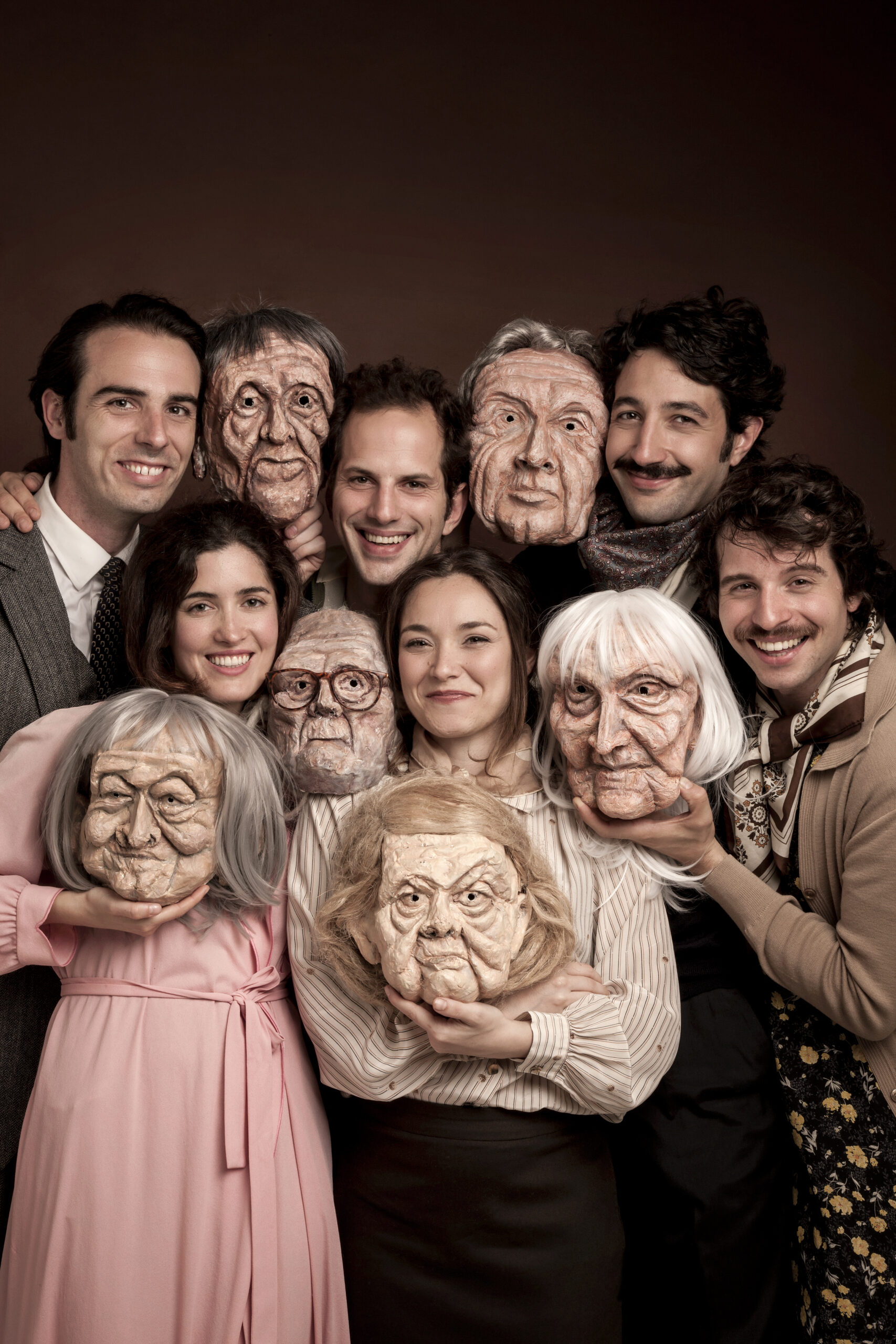
Teatro Dei Gordi: Visite
Founded in Milan in 2010, Teatro dei Gordi have become one of the most distinctive ensemble companies in European theatre. Funny, precise and entirely without words, their work travels because it needs no translation.
Teatro Dei Gordi’s name was coined in 2010 in a rented flat in Venice – a handful of young performers, freshly graduated from the Paolo Grassi drama school in Milan, workshopping in their downtime. It stuck partly as a pun on their academy (grassi meaning fat or rich in Italian), partly because in Latin gurdus means fertile ground. They are officially Teatro dei Gordi; informally, simply Gordi.
They have always operated as a collective: eleven members, no permanent building, a cultural association rather than a company in the conventional sense. Gordi began with co-productions, and have made their home, institutionally, at Teatro Franco Parenti in Milan. The animating artistic force since 2015 has been director Riccardo Pippa, who encountered the group through a dramaturgy workshop at Paolo Grassi and brought them the outline of his first show – a piece about Death loosely inspired by a street puppeteer he’d watched fixing passers-by with a skull’s gaze.
Gordi’s most distinctive tool is the papier-mâché mask, and understanding their relationship to it goes some way to understanding everything else about their work.
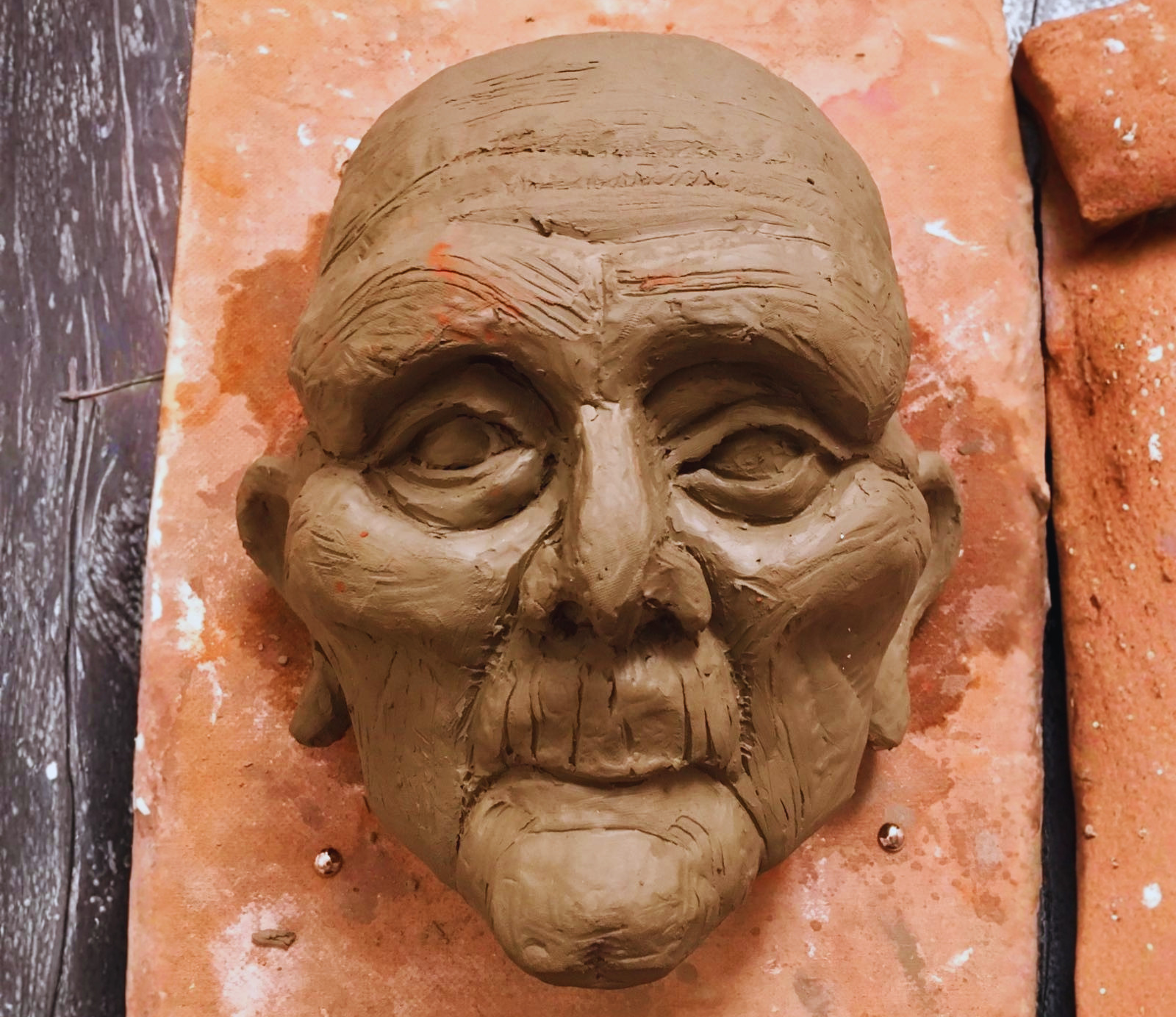
Their masks are made by hand by Ilaria Ariemme, who has collaborated with the company since their beginning and whose work Italian critics have compared to the painted faces of the German Expressionist painter Otto Dix: vivid, slightly distorted, intensely legible, and unexpectedly funny. Papier-mâché is a material that is genuinely unpredictable: so from mould to finished object there is always a margin of surprise during creation. And it is not just the mask itself – it is the encounter between the mask and the particular body of the actor wearing it, which creates a different figure each time.
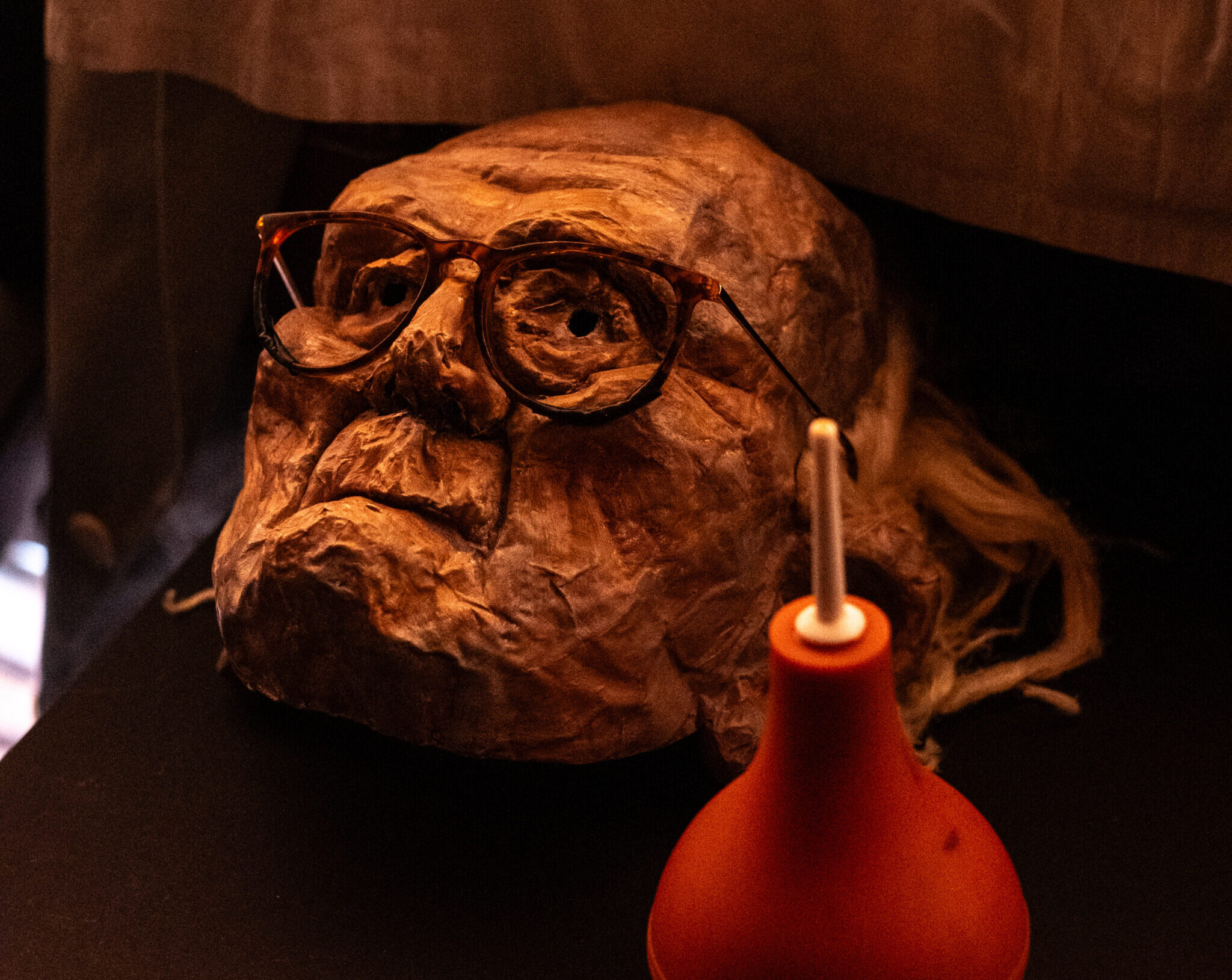
Pippa has spoken in interviews about a key principle that governs this: it is the bodies that inhabit the masks, not the masks that clothe the bodies. They are not made to measure, but entirely freehand, and no two are alike – which means casting is itself a creative act, one full of unexpected discoveries. A mask originally intended to be a man may turn out, on an actress, to have far stronger character. Sometimes the mask dictates the dramaturgy rather than the other way around: during the making of Sulla Morte Senza Esagerare, a mask created to represent a child came out too short on the actor’s face. Rather than remaking it, they lengthened the chin and added wrinkles, arriving at an elderly woman whose upper face still carried the eyes and expression of a child. From that strange tension, one of the show’s most affecting scenes was born.
Gordi’s theatre is almost entirely non-verbal. This is not a programmatic stance against language, but an instinct that the stories they want to tell are better told through the body. The shows are entirely built on the dynamics of physical scores and the mime of gestures and microgestures. The inspiration for this approach came partly from the German company Familie Flöz, whose wordless mask theatre Pippa encountered early in his career and found both liberating and reassuring – if they could hold an audience for ninety minutes without a word of text, so could Gordi. The common thread of Gordi’s path is the search for a specifically theatrical language, made of movement, scores of concrete gestures, objects, clothes, masks, music, poetry, presence and encounter.
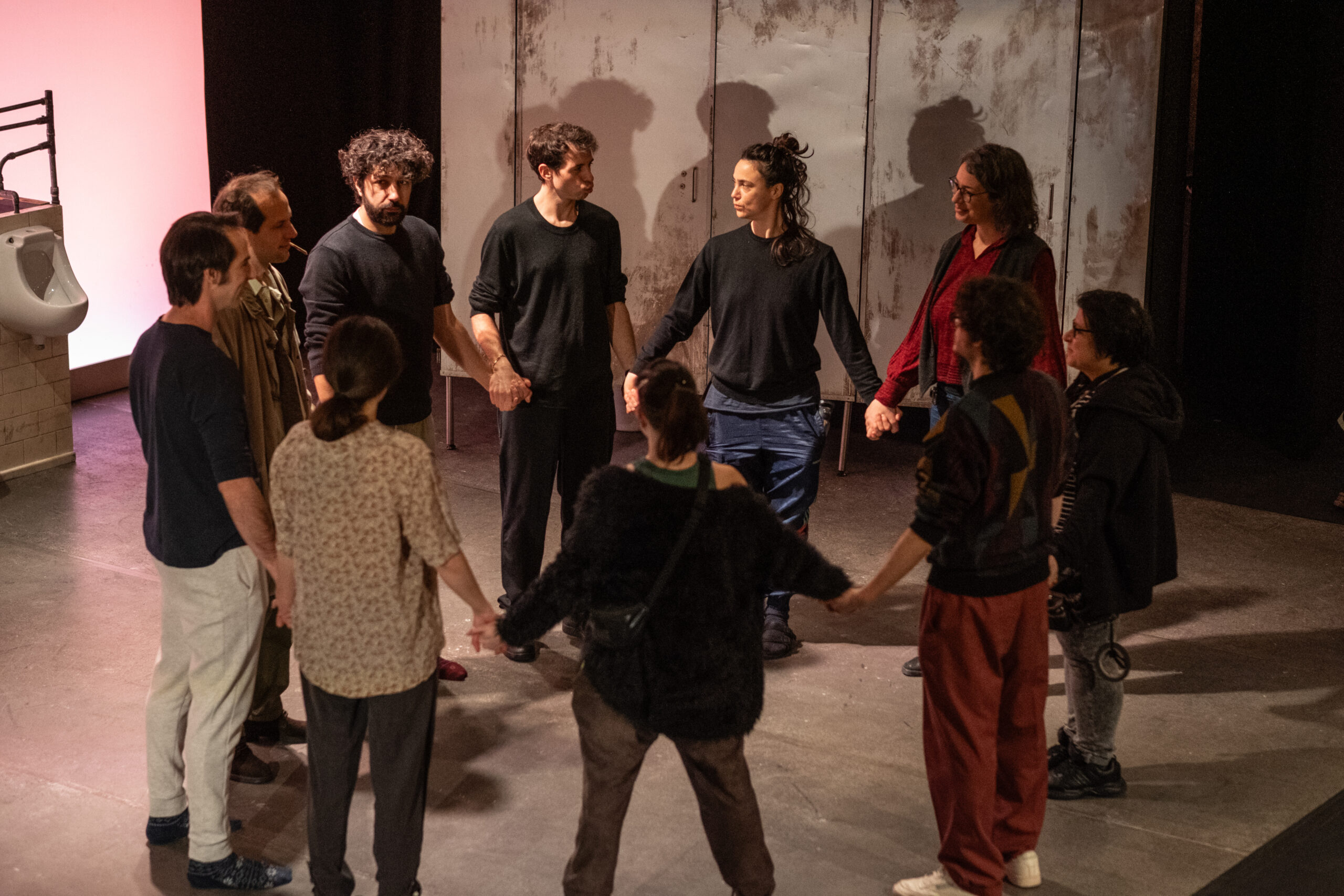
Teatro dei Gordi created made five major productions since 2016:
Sulla Morte Senza Esagerare (2016) – their breakthrough – placed a world-weary Death on a park bench and sent her a procession of the living: accident victims, restless escorts, elderly husbands, would-be suicides. Tragic and comic in equal measure, it won multiple prizes on its debut. The Coronet Theatre brought it to London in 2023; it sold out.
Visite (2018) puts time at the centre of the piece – the whole span of a human life unfolding in a single bedroom through a series of visits from friends, family, doctors and strangers. It won the Hystrio-Iceberg Award in 2019, Italy’s most significant recognition for an emerging company.
Pandora (2020), selected for the Venice Biennale Teatro, sent six performers cycling through over fifty identities in a public toilet. It played at the Coronet in 2025 and was again popular with audiences and critics alike.
In Sidenotes (2024), Gordi turned their attention to the funeral wake: an open coffin, some vestments, and a cast of mourners whose different relationships to grief pull against the ceremony’s demand for decorum.
A Brief Encyclopedia of Doors (2025), commissioned for Gorizia and Nova Gorica as European Capital of Culture, used the conceit of an encyclopedia to explore every kind of threshold – real, imaginary and social.
This May, Gordi return to The Coronet Theatre with their acclaimed Visite. Don’t miss the chance to catch one of Italy’s most exciting ensemble companies in one of their finest works.